If you’ve spent more than five minutes teaching upper-elementary or middle school, you already know something scientists later confirmed: kids learn better when they move. Their brains fire faster, they remember longer, and—maybe most importantly for our sanity—the classroom feels lighter, calmer, and more joyful.
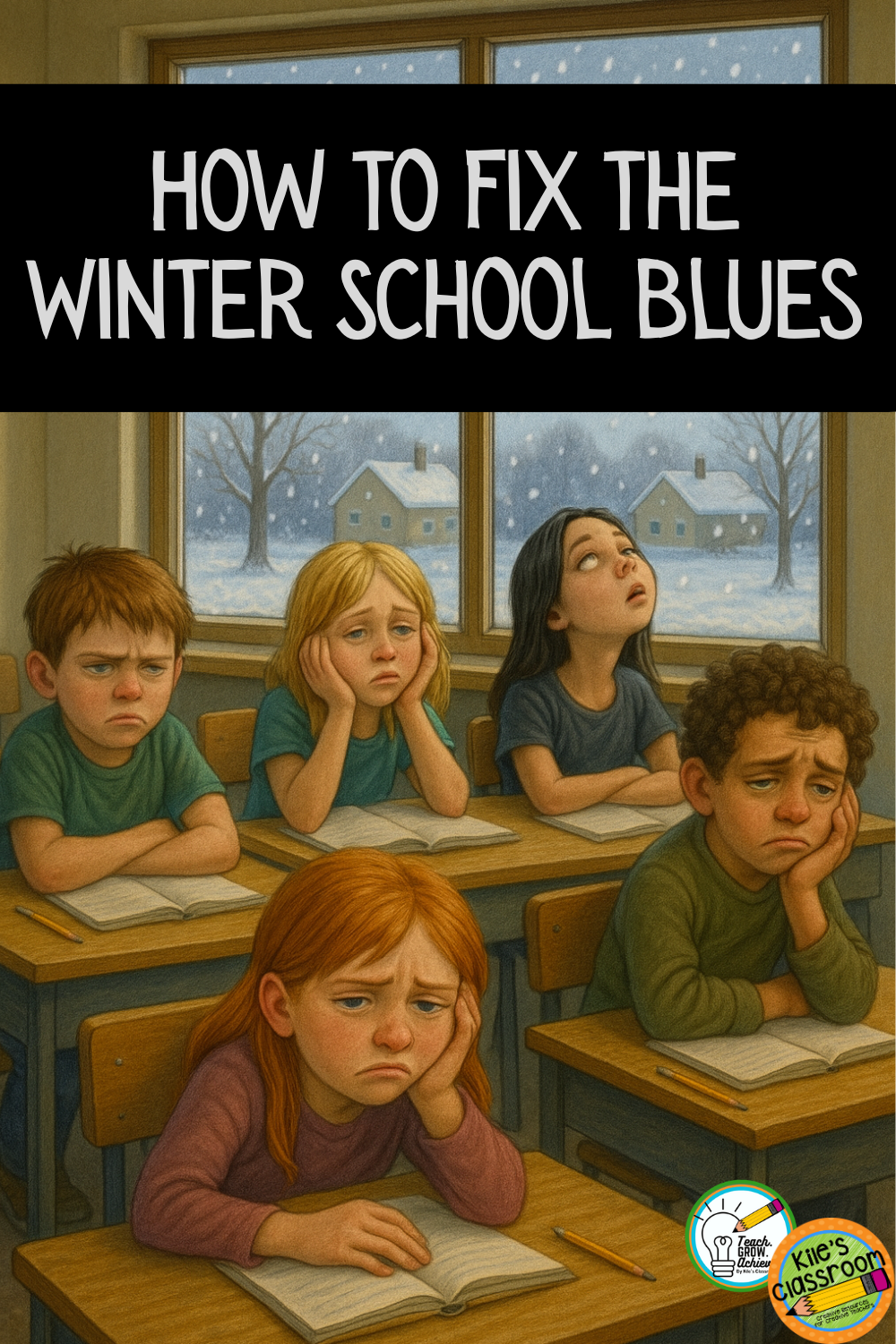
Movement isn’t a “break” from learning.
Movement is learning.
And the beautiful part? You don’t have to overhaul your whole room or spend hours prepping the next trendy activity. A few simple shifts can help your students make deeper connections, stay engaged, and actually enjoy practicing those trickier math concepts.
Let’s talk about some realistic, teacher-friendly ways to make movement work for you—even between Thanksgiving and spring testing season.
Why Movement Helps the Brain Learn
When students move, several magical things happen:
- Oxygen flow increases → the brain wakes up
- Neural pathways strengthen → concepts stick
- Stress lowers → confidence rises
- Attention improves → fewer “Can I go to the bathroom?” escape requests
Movement activates the whole learner—body, brain, energy, and curiosity.
And honestly? After 24 years in classrooms, I’ve seen movement turn some of my most hesitant learners into the ones begging for “just one more problem.”
Let’s put that magic into action.
1. Try Problem Trails: Movement With Purpose
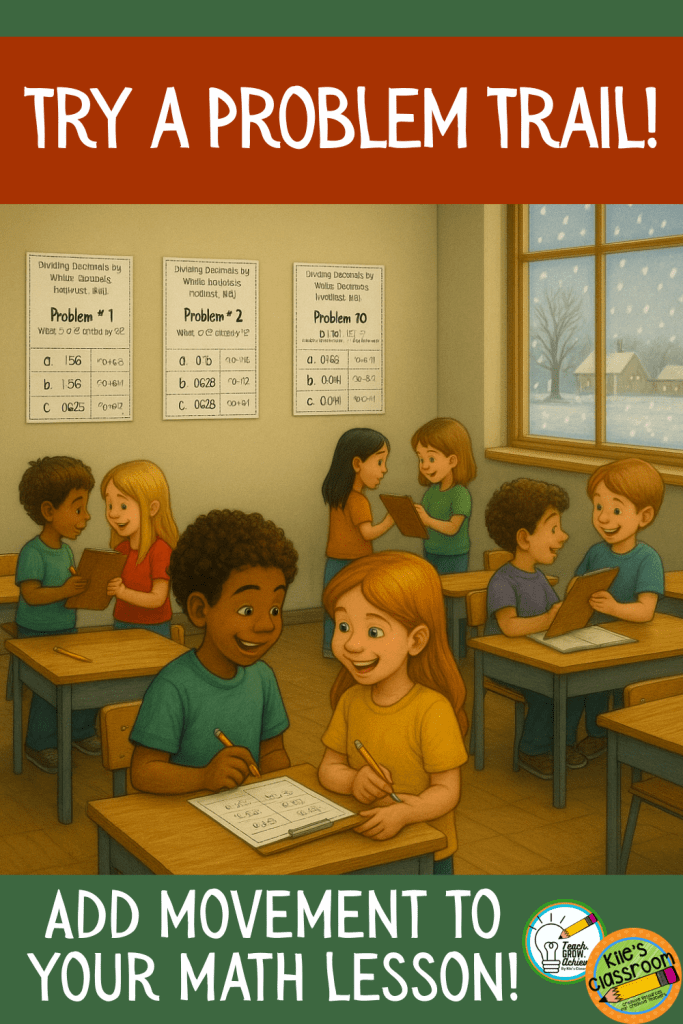
Problem Trails from Kile’s Classroom are one of the easiest ways to blend movement and math. Students walk around the room solving problems you’ve posted on the walls. They work at their own pace, clipboard in hand, moving, thinking, and collaborating without even realizing how much practice they’re getting.
Why teachers love them:
- Low prep
- Immediate engagement
- Perfect for indoor winter days
- Built for grades 3–8
- A natural way to practice total participation
How to use them tomorrow:
- Print a set (fractions, equations, decimals, multi-step problems—so many options!).
- Tape them around the room.
- Give kids a clipboard and a recording sheet.
- Watch your wigglers turn into mathematicians-on-the-move.
Your room becomes a math adventure instead of a desk marathon. And yes—students actually stay focused because their bodies are doing what they naturally need to do.
2. Use Partner Math Talk to Turn Movement Into Meaning
Movement is powerful.
Movement + conversation?
Even better.
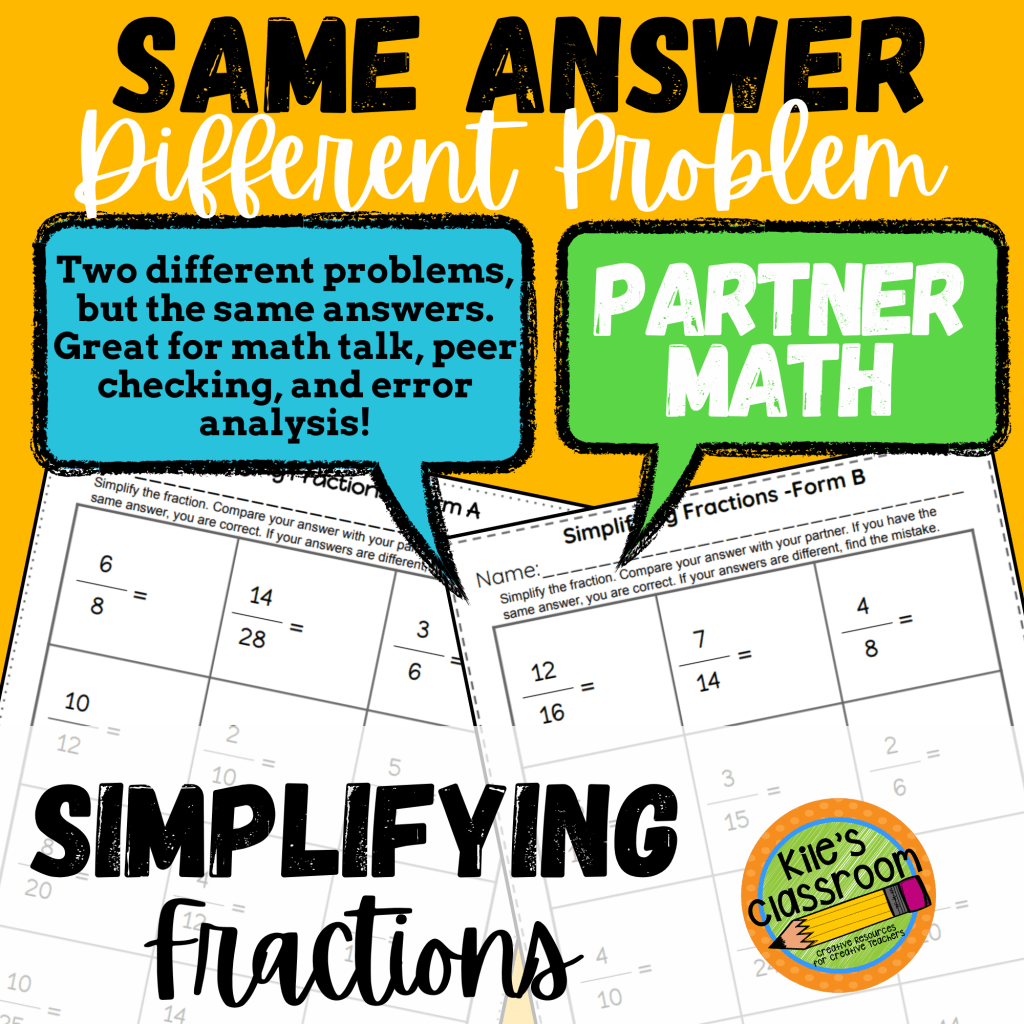
Partner Math Talk (another favorite resource from Kile’s Classroom) gives students structured prompts to talk and think with a peer without awkward silence or off-topic wandering. Have the students move to a different spot in the room for the discussion, or switch partners after every problem! A great way to deepen math understanding and get out the wiggles.
Try this simple routine:
- Pair students up.
- Copy form A on one color paper and form B on another. Make sure each pair has a different color.
- Partners solve their own problems. Each student has a unique problem, but the answers to both are the same.
- If the answers match, the problem was solved correctly. If not, time to help each other out and find the mistake.
- “Explain how you know your answer is reasonable.”
- “Compare two strategies and choose the more efficient one.”
- Then, switch to a new partner. Find someone you have not worked with who has the other color paper and do the next problem together.
It builds vocabulary, reasoning, and confidence—especially for students who need time to talk through ideas before writing.
3. “Stand Up, Find the Problem” Review
When you need quick, no-prep movement:
- Write 8–10 problems on sticky notes.
- Hide them around the room (walls, bookcases, doorframes).
- Students stand, find a problem, solve it, and return to check in.
- Then they choose a different one.
This is terrific for:
- Integer practice
- Order of operations
- Quick review days
- Last 5 minutes of class when kids are melting
4. Movement Stations (Not Just for Littles!)
Create four “corners” for four types of problems.
Groups rotate every 5–6 minutes.
Ideas for grades 4–7:
- Corner 1: Comparing fractions
- Corner 2: Area and perimeter
- Corner 3: Algebraic expressions
- Corner 4: Word problems that require modeling
Kids move + think + collaborate = a calmer, more productive class.
5. Chair-Free Review
Yes, you read that right.
Every once in a while, have students place their chairs along the back wall and work standing at tables or whiteboards.
Why it works:
- Standing increases alertness
- Fidgeting disappears because movement is allowed
- Collaboration is seamless
Great for:
- Multi-step problem solving
- Showing work on whiteboards
- Partner modeling or error analysis
6. Math Relay Races (Academic… but fun)
This is perfect when energy levels are high and attention is low.
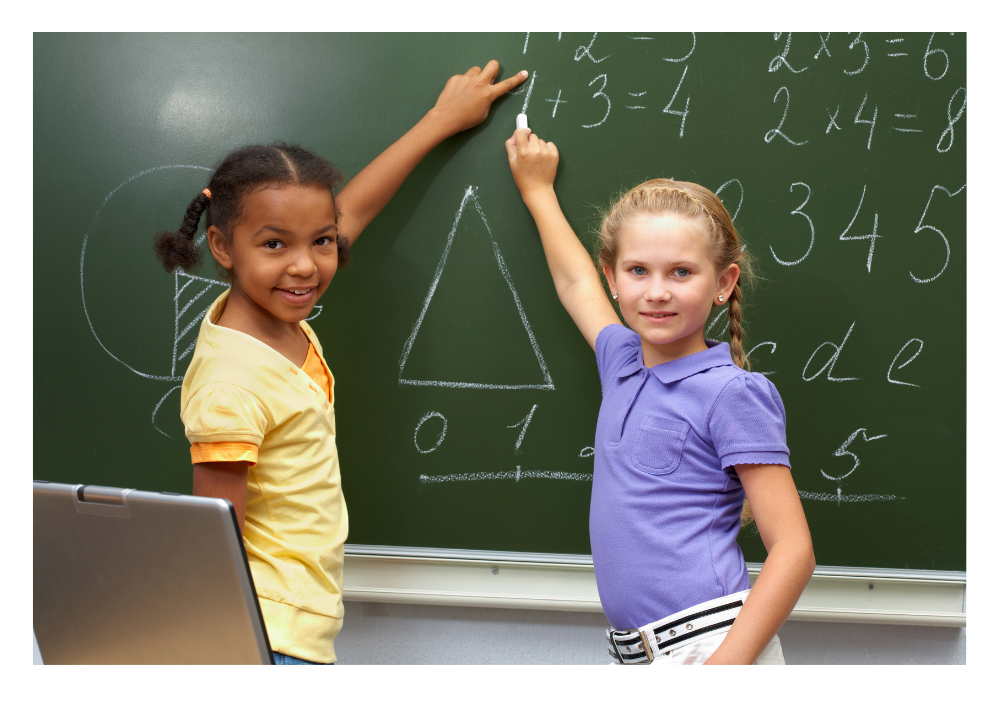
How it works:
- Give each team a stack of problems.
- Only one student runs to the board at a time to solve the next step.
- The team must agree before they send someone to add the next part.
It’s loud, it’s fast, and somehow even the quiet kids end up cheering.
7. Warm-Up Walk & Solve
Before you start a lesson:
- Post 5 warm-up questions around the room.
- Students walk with a partner to answer them.
- They return ready to learn—bodies settled, brains activated.
This tiny shift changes the tone of your whole block.
The Big Picture: Movement Isn’t Extra… It’s Essential
Movement brings out the best in our students:
- More confidence
- More engagement
- More joy
- Deeper understanding
And it brings out the best in us as teachers, too. When the room feels alive, learning feels possible. Kids feel capable. And we feel like, “Okay… I can actually do this job today.”
As winter settles in and kids spend more time indoors, sprinkle these ideas into your days. You’ll see stronger thinking, calmer classrooms, and students who genuinely love being part of the learning process.
Want Ready-Made Movement Resources?
✨ Problem Trails — Movement-based math practice for grades 3–8
✨ Partner Math Talk — Structured walk-and-talk tasks that deepen reasoning

 kilesclassroom.com