
I used to think vocabulary was supposed to be fancy. Colorful posters. Elaborate games that took longer to explain than to play. Then I watched a teacher introduce vocabulary with a clear, predictable routine that made sense. After more research into the best practices for what words to teach and how to teach them, my students’ vocabulary knowledge (and reading comprehension) soared!
Below is a teacher-friendly routine you can start tomorrow. It is grounded in the work of Anita Archer on explicit instruction. The goal is to make word learning simple, active, and unforgettable.

Make your word wall come alive and actually build student vocabulary!
Why a vocabulary routine is best practice
- Students remember what they actively process. A routine creates many short chances to think and respond.
- Clear steps remove guesswork. You teach the word the same way every time, which frees up brain space for learning.
- Frequent checks let you correct small errors before they become habits.
- Short practice across many days leads to durable learning. A simple routine makes that spacing possible.
The Routine at a Glance
Choosing words for instruction
Keep it simple and focused on what moves comprehension. Choose mostly Tier 2 words because they show up across subjects, carry precise meaning, and help students unlock complex sentences. In other words, they give you the most growth for the time you spend. This lines up with Anita Archer’s approach to explicit instruction and with the research on word tiers from Beck and colleagues.
My quick sort each week
- Read the text and circle words that feel essential to understanding.
- From those, star three to five Tier 2 words. These are useful in many classes, not just this unit.
- Test each choice with four questions.
- Will students meet this word again in science, social studies, math, or text they choose to read?
- Is it central to the main idea of the passage?
- Does it connect to a word family I can grow with morphology?
- Can students use it in speaking and writing this week?
- Final check. Can I give a clear student-friendly meaning in one sentence and two quick examples?
- If yes, it goes into the routine.
What I do with the other words listed in the unit that are not Tier 2?
- Tier 3 terms– Words specific to that text only.
Give a short definition, show a picture or diagram, and revisit during labs, notes, and quizzes. - Tier 1 everyday words– easily recognizable and used every day. Most students will already know these words.
Clarify in the moment as we read or talk. No formal lesson needed. - Interesting extras
Park them in a class or personal glossary, add a quick margin gloss in the text, or do a micro lesson during reading. Students can collect one favorite word in a notebook and bring it up during warm-up.
Teach the word in six brisk moves
- Say the word
The teacher says the word. Students repeat. Everyone tracks the print so they can see and say it. - Give a student-friendly meaning
Keep it clear and conversational. One sentence works well. - Use it in context
Share a short sentence from your text or from real life. Students echo the sentence. - Examples and not examples
Provide two quick examples and one not example. Students decide which ones fit. They show a signal to respond. - Check for understanding
Ask a fast question that makes students think with the word. Students respond all at once. - Students use the word
Students turn and talk with a sentence frame or write a one-line response. You listen for accuracy and give quick feedback.
After class and across the week
- Revisit words in a two-minute review. Mix quick oral practice with brief writing.
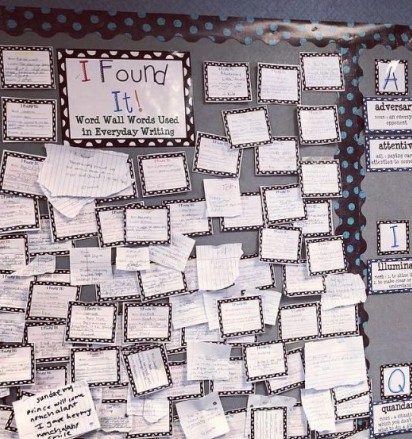
- Have a way for students to note when they see the word in another text. Having an “I Found It” wall is a fun way to use the vocabulary.
- Spiral older words into warm-ups, exit tickets, and small group talk.


A sample script for one word
Teacher: The word is reluctant. Say it.
Students: Reluctant.
Teacher: Reluctant means you do not want to do something at first.
Teacher: In our story, Marcus was reluctant to present his project.
Teacher: Which is an example of reluctant? A student who jumps to the front to share, or a student who takes a deep breath and waits before walking up. Show one finger for the first choice and two for the second.
Students respond.
Teacher: Use the frame. I felt reluctant when _____. Turn and talk.
Students share. Teacher praises accurate use and nudges where needed.
The total time is about 2-4 minutes, but when you stick to the routine, students tend to get faster.
Activities to mix into steps four through six
Rotate a few of these so practice stays fresh while the routine stays steady.
- Quick choices
Students show fingers for A B C. Great for examples and not examples. - Word association
Say the target word. Students say a related word on your signal. Two or three rounds go fast and keep energy up. - This or that
Call two words. Students point to the wall card that best fits a clue. - Have you ever
Ask a life link. Have you ever felt reluctant to try a new sport? Students whisper yes or no and add one sentence to explain. - Finish the frame
Provide a simple stem. A situation where I would feel reluctant is ____________. Students speak or jot a one-line response. - Act it out
Silent sketch or short charades. Class names the word on a signal. - Morpheme moments
Break a word into parts when it makes sense. Discuss the prefixes, suffixes, and roots. Talk about the meaning of the parts and how those parts affect the meaning of the whole word. - Semantic line
Place words on a mild to strong line. Sad to devastated. Students justify where the target belongs. - Odd one out
Show three words. Students pick the word that does not belong and tell why. - Picture it
Students draw a small icon next to the word in their notes. Ten seconds only.
All students respond every time
This is the heartbeat of explicit instruction. When every student responds, you see what they know, and they get a memory boost. Here are fast ways to make that happen in seconds.
- Choral response for saying the word and the definition. Use a clear signal so voices begin and end together. (Hand on your heart when you speak, arm outstretched with the students repeat)
- Nonverbal checks during examples and not examples. Fingers, cards, or a quick point.
- Whisper to a partner for sentence frames. Everyone gets rehearsal time. Then everyone shares out.
- Write and lift with small whiteboards or sticky notes. Students write a one-line or shorter response. Everyone reveals their response on your signal.
- Cold calling with care after everyone has rehearsed. Because every student has already tried it, the call feels fair.
Why it matters
- More responses mean more practice, which leads to stronger memory.
- Many short successes build confidence.
- You catch and correct errors right away, which keeps the class on track.
- Active classes are focused classes. Busy brains leave less room for side conversations.
- Repeated practice is a necessity for learning.
What to do when a student does not want to answer
- Preload success
Give quiet think time and a sentence frame before you invite responses. - Pair first, then share
Let students practice with a partner. Then call on anyone. This keeps the room safe and still keeps everyone accountable. - Offer choices
Choose a word and give an example. Or choose an example and name the word. Choice builds buy-in. - No opt-out with support
If a student gets stuck, you model a short correct response. Then the student repeats it. They experience success and stay part of the routine. - Warm calling
Tell a reluctant student privately. I will ask you the first question next time. Here is the frame I will use. This turns surprise into preparation. - Praise the effort
Notice the try. That was clear and brave. Thank you. Specific praise grows participation.
Planning guide you can copy into tomorrow’s lesson
Pick the words
- Three to five Tier 2 words from your current text or unit
Prepare
- One student-friendly meaning for each word (Use AI for quick, kid-friendly definitions)
- One sentence from the text
- Two examples and one non-example
During instruction
- Say the word. Students repeat.
- Give the meaning.
- Use it in context.
- Examples and not examples with a fast signal.
- Quick check. Everyone responds.
- Use the word with a frame. Turn and talk or write and lift.
After instruction
To lock in learning, you must include repeated and spaced practice.
- Two-minute spiral review tomorrow and again next week.
- Bring back older words in warm-ups and exit tickets
Final thought
Vocabulary does not need to be a big production. It needs to be clear, active, and consistent. Anita Archer’s message is simple. Teach it directly. Practice it often. Make everyone respond. When you do, students begin to use rich words in real places. And that is the moment that makes all of it worth it.
Click HERE to see a huge selection of vocabulary-related activities from Kile’s Classroom on TpT


 kilesclassroom.com
One thought on “A Simple Vocabulary Routine That Actually Sticks”